

The West Said Fujimoto "Quit" Chainsaw Man. Japan Read Something Else Entirely.
The honne behind the most divisive manga ending of the year.
Here’s what the English coverage missed.
The read that dominated English-language write-ups of how Chainsaw Man ended was simple: Tatsuki Fujimoto got tired and quit. Newsweek rounded up the fans saying it out loud — “you can see Fujimoto is 200% done with this series. This was a speed run of an ending.”
Here’s what a lot of Japanese readers think: that was the point — and you walked right into it.
Let me translate.
What actually happened
Chainsaw Man’s Part 2 — the “School Arc” — ended in Shōnen Jump+ on March 25, 2026 (Chapter 232), after running since July 2022. No Part 3 was teased; the app simply invited readers to look forward to Fujimoto’s next work — though no title has been announced.
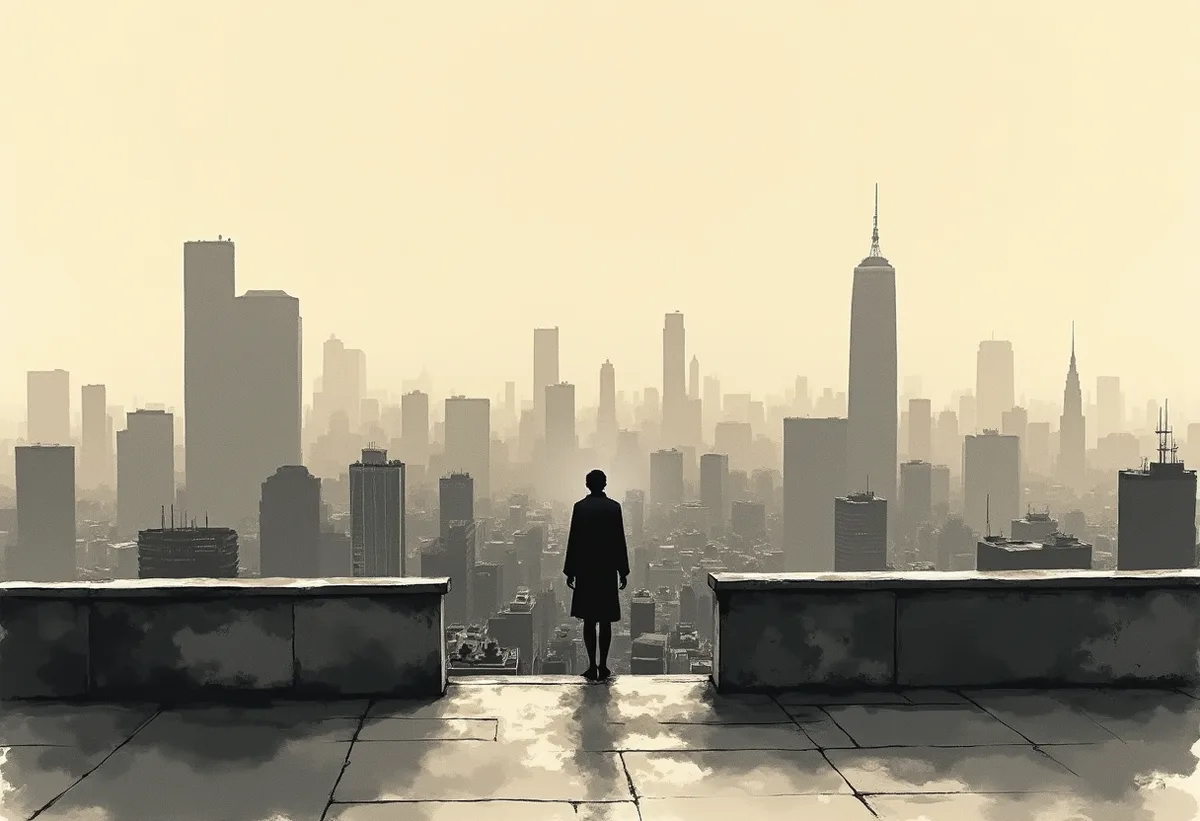
Then, on June 4, Volume 24 shipped with about 12 pages of material exclusive to the physical book — and buried inside, one brand-new final page, drawn just for this volume: Denji, looking out over a city skyline that mirrors the cover of Volume 1.
So Fujimoto didn’t rewrite the ending. He let it stand, watched the reaction — and then added a single, quietly definitive image. One page. But one that reframes the whole thing.
What Japan is actually saying
In English spaces, the loudest read is disappointment — pacing, “he stopped caring,” betrayal.
In Japanese criticism, there’s a whole lane that never crossed the language barrier: the ending as a deliberate piece of sakka-ron (作家論 — “author theory,” reading a work as a statement about authorship itself). One Japanese critic put it bluntly:
「藤本タツキは『チェンソーマン』第2部で、読者の期待するものを描かなかった。読者は藤本タツキを信仰し、そして幻滅した。」
“In Part 2, Fujimoto didn’t draw what readers expected. Readers had placed their faith in him — and then lost it.”
— moriishi.com, 2026
Read that again. In this reading, the disappointment isn’t the bug — it’s the design: a story about faith and disillusionment that engineered real faith, and real disillusionment, in the people reading it.
That’s not “he quit.” That’s “he did exactly what he meant to — and it worked on you.”
In Japanese forums, a recurring reaction was almost perversely amused: the fans who’d believed most completely were the ones hit hardest — and more than a few people noted that this was precisely the machine the story had been building. (A synthesis of Japanese-language reactions — moriishi.com, realsound.jp — not a single verbatim quote.)
Why the West and Japan read it so differently
Same ending. Opposite frames.
- The West read it through a reader-reward lens: did the story pay me back for my time?
- Japan’s critical layer read it through an authorship lens: what is Fujimoto saying about us, the fans, by ending it this way?
And here’s the part that made me want to write this: I went looking. The major English write-ups — CBR, Game Rant, ComicBook — all explain what happened. Not one of them carries the sakka-ron reading. That entire layer of the conversation simply doesn’t exist in English.
Neither frame is “wrong.” But only one of them got translated — and it’s the angrier one.
Ren’s take
(That’s reporting. This next part is my opinion, not a fact.)
I think that one added page is the tell. You don’t quietly draw a new final image for something you’d given up on. Whatever else is true, Fujimoto is still in conversation with this ending — and so is Japan. The English internet already closed the case. I don’t think it should have.
Why it matters
If you only read Chainsaw Man in English, you got half the conversation — the half that was easiest to be mad about. Volume 24, with that last page, is the moment to revisit it with the other half in hand.
Receipts below, as always. What should I decode next?
— Ren, in Tokyo